


Best Ayurvedic Healing Meal - Kitchari
- Alena Speed
- Sep 9, 2024
- 4 min read
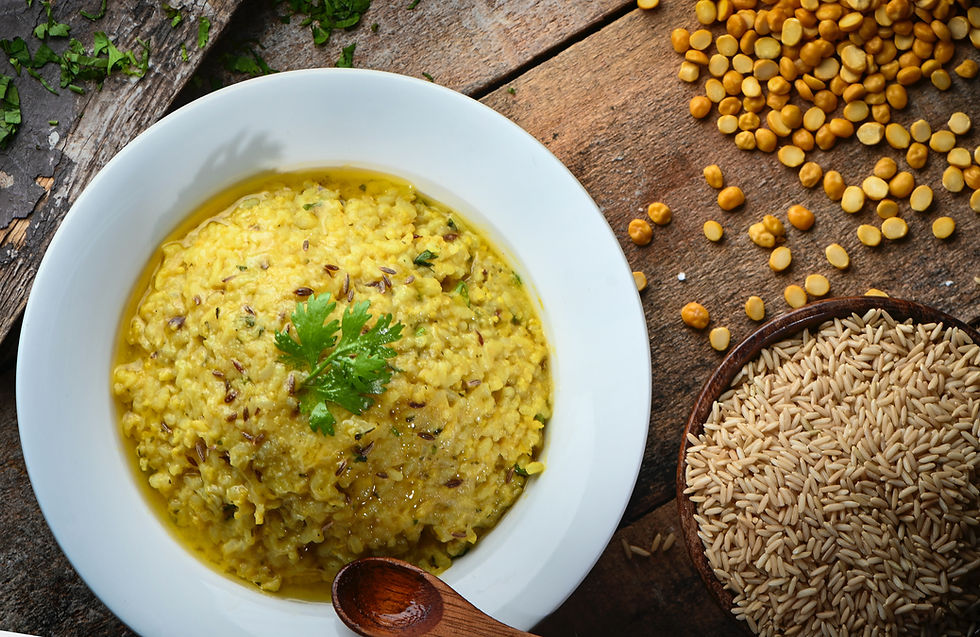
If you see an Ayurvedic Practitioner, especially in the West, you will most definitely be recommended to cook Kitchari as your number one meal if you'd like to reset your digestion after experiencing symptoms of indigestion like loose bowels, bloating, gas, lethargy, acid reflux, excessive burping, coating on the tongue, bad breath, list goes on.
Most often to rid of indigestion , you are recommended a lightening diet of Kitchari to give your digestion some rest to be able to digest and eliminate any ama (toxins) that might be lingering in your system for whatever reason (environmental and emotional stresses, poor diet, overeating).
Kitchari is a preferred food to use when fasting on a mono-fast (1-2 days are enough to reset your digestion) or while going through the cleansing programs such as seasonal detoxification or yearly deep Ayurvedic detox Panchakarma.

Saying that, just from my experience, every time I go to Kerala, India for my Panchakarma detoxification, I am never offered Kitchari and Ayurvedic doctors there dont' seem to be familiar with this dish but it could be just an odd Kerala thing :)
Kitchari is a seasoned mixture of basmati rice and mung dhal which together create a complete protein meal also very high in fiber. It is very easy to digest which is what we want during detoxification process; it nourishes all tissues of the body and good for absolutely anyone (tridoshic as Ayurveda would state - balancing for all three doshas - vata, pitta and kapha).
We can "pimp" our Kitchari to tailor any body constitution and imbalance which is what I personally love about implementing Ayurvedic principles and here is HOW...
Mung Dhal Kitchari (Tridoshic)
Tridoshic - fancy word for excellent for anyone no matter of your imbalance or constitution
1 cup yellow mung dhal (buy organic if you can)
1 cup basmati white rice (buy aged basmati rice if you can for better flavour)
some shredded or chopped fresh ginger (maybe 2cm long chunk)
2 tbsp shredded unsweetened coconut (great to balance Pitta dosha (heat, acidity) - i personally don't add to my Kitchari but you may like it)
small handful fresh cilantro leaves (I add heaps for high anti-oxidant hit due to flavonoid quercetin in cilantro which protects from free radicals; cilantro is also very calming for nervous system, lowers blood sugar levels and reduces chances of Urinary Tract Infections - which I am all for :))
3 tbsp ghee (vegan option - coconut oil)
small piece of cinnamon bark
5 whole cardamom pods (best and safest digestive)
5 whole cloves
10 black peppercorns
3 bay leaves
1/4 tsp turmeric
3/4 tsp salt or to taste
6 cups of water (I would add more for thinner soupier Kitchari)
Wash Mung Dhal 7 times and Basmati rice until clear. You may soak mung dhal for a few hours but you don't have to.
Mung Dhal is very easy to digest and one of the very few beans that doesn't need to be soaked and it doesn't produce gas, hence it's so perfect to use during detoxification or relieve indigestion.
Heat a large saucepan on medium heat and add ghee, cinnamon, cloves, cardamom, peppercorns and bay leaves. Stir for a moment until fragrant. Add ginger, coconut, turmeric and salt. Stir until lightly browned.
Stir in the mung dhal and rice and mix very well.
Pour 6 or more cups of water, cover and bring to boil. Let boil for 5 minutes, then reduce down the heat to very low and cook, lightly covered, until dhal and rice are soft, about 25-30 minutes.
Turn the heat off and add chopped coriander.
I love serving Kitchari with some sliced avocado and lime/lemon juice sprinkled over it.
Pimping Your Kitchari to suit your Dosha (your individual constitution or imbalance)
A few things that you can do with this wonderful meal...
If you have more Kapha in you (feeling a bit more sluggish, perhaps some excess weight at the moment, water retention, nasal congestion)
replace with 1 1/2 cup yellow mung dhal and 1/2 cup of basmati rice (will increase protein and fiber content and reduce carbohydrate content)
skip shredded coconut as it is more tissue building, sweet and heavy in qualities and more perfect for vata and pitta
add more cinnamon if you like
add 2 tsp mustard seeds and pop them first on ghee before adding other spices
If you have more Vata in you (feeling ungrounded, gassy, bloated, unsettled, excessive burping, you get the drift)
add 2 tsp mustard seeds and pop them first on ghee before adding other spices
add a pinch of hing (asafoetida)
add 1 tsp cumin seeds
you may also want to precook rice and mung dhal first, rinse off the white foamy dirty water and then add fresh water and bring to boil; after that add all the spices cooked in ghee and cook for 5 more minutes all together. This will prevent any gas or bloating after the meal
If you are quite a little hot Pitta (high metabolism and hunger, can't skip a meal otherwise will feel "hangry", prone to heat rashes, urinary tract infections, loose bowels, acid reflux and burning pains in your stomach or body)
avoid black peppercorns
don't be afraid to add more shredded coconut and ghee
Enjoy your Kitchari



Comments